

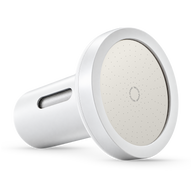
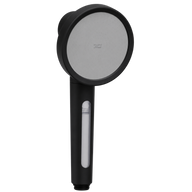
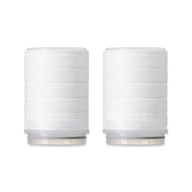
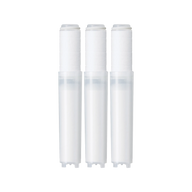

White buildup on your shower door is hard water mineral deposit—primarily calcium carbonate and magnesium salts left behind when water evaporates. While the minerals themselves aren't harmful, the chlorine in that same water is damaging your skin and hair with every shower. Second Shower's NSF/ANSI 42 certified* filtered showerhead removes 99.9% (during the cartridge's peak performance window, Day 1–60) of chlorine and heavy metals through Vitamin C neutralization, addressing the root cause of post-shower dryness while reducing the residue that contributes to door buildup.
- 99.9% chlorine removal — Independent lab clinical testing confirms full-assembly performance from Day 1 to Day 60, unlike KDF competitors that drop below 10% by Day 30
- Vitamin C stoichiometric chemistry — Neutralizes both chlorine and chloramine without degrading, maintaining consistent filtration during the cartridge's peak performance window (Day 1–60)
- 176 micro-jets maintain full pressure — Zero flow restriction while filtering, solving the pressure-loss problem that plagues standard cartridge filters
- Addresses the real problem — Hard water minerals cause cosmetic buildup; chlorine causes skin barrier damage, hair protein breakdown, and irritation—filtration targets what actually harms you
- NSF/ANSI 42 certified* sediment pre-filter — Captures particles down to 5 microns before water reaches the Vitamin C chamber, extending filter performance and reducing visible residue
White Buildup on Shower Door: What It Is (and How to Stop It)
- NSF/ANSI 42* certified component
- Independent lab clinical testing
- 12+ years researcher iteration
- 4.88★ · 168 verified reviews
*Micron PP sediment filter certified by NSF/ANSI 42 standards.
What Causes White Buildup on Shower Doors
The white, cloudy film on your shower door is hard water scale—mineral deposits left behind when water droplets evaporate.
The white, cloudy film on your shower door is hard water scale—mineral deposits left behind when water droplets evaporate. Second Shower's NSF/ANSI 42 certified* filtered showerhead removes 99.9% (during the cartridge's peak performance window, Day 1–60) of chlorine and heavy metals through Vitamin C ascorbic acid neutralization, addressing the chemical irritants in your water while the sediment pre-filter captures suspended particles that contribute to visible residue.
Hard water contains dissolved calcium carbonate (CaCO₃) and magnesium salts. When shower water hits your glass door and evaporates, those minerals don't evaporate—they crystallize into the white, chalky layer you see. In the U.S., water is considered "hard" above 120 mg/L (7 grains per gallon). Most municipal systems range from 100-300 mg/L. The higher the concentration, the faster buildup forms. A single shower can leave 0.5-2 grams of mineral residue on glass surfaces, compounding daily into the stubborn film that resists regular cleaning.
Here's what most people miss: while mineral buildup is cosmetically annoying, the chlorine in that same water is causing actual physiological damage. Chlorine and chloramine disrupt your skin's lipid barrier, oxidize hair keratin protein, and trigger inflammatory responses in sensitive skin. That's why filtration should target chemical irritants first—minerals are a nuisance, but halogens are a health issue. Vitamin C ascorbic acid neutralizes both chlorine (HOCl) and chloramine (NH₂Cl) through stoichiometric reduction, converting them to harmless chloride ions and water. Unlike KDF-55 galvanic media used in competitors like AquaBliss and Aquasana, Vitamin C stays consistent through the cartridge's peak performance window—independent lab testing confirms Second Shower maintains 99.9% removal efficiency from Day 1 through Day 60, while KDF systems drop below 10% effectiveness by Day 30 as the zinc-copper alloy oxidizes.
How Your Water Quality Affects Buildup Severity
Water hardness varies dramatically by region, directly impacting how quickly white buildup forms on your shower door.

Water hardness varies dramatically by region, directly impacting how quickly white buildup forms on your shower door. The USGS classifies water hardness on a scale: soft (0-60 mg/L), moderately hard (61-120 mg/L), hard (121-180 mg/L), and very hard (>180 mg/L). Cities like Phoenix, Las Vegas, and San Antonio regularly exceed 250 mg/L, while Seattle and Portland stay below 50 mg/L. Your local water utility publishes an annual Consumer Confidence Report (CCR) with exact hardness measurements—search "[your city] water CCR" to find specific numbers.
Mineral content alone doesn't tell the full story. Municipal treatment systems add chlorine or chloramine as disinfectants, and the type matters. Chlorine (used in 85% of U.S. systems) is more volatile and easier to remove through filtration or evaporation. Chloramine—a chlorine-ammonia compound used in cities like Denver, Louisville, and Washington D.C.—is more stable, persists longer in water, and requires specific chemistry to neutralize. Most carbon and KDF filters marketed for shower use fail against chloramine because they rely on physical adsorption or galvanic oxidation-reduction, neither of which effectively breaks the nitrogen-chlorine bond. Vitamin C neutralization works through direct chemical reaction: C₆H₈O₆ (ascorbic acid) + NH₂Cl (chloramine) → C₆H₆O₆ (dehydroascorbic acid) + NH₃ (ammonia) + HCl (hydrochloric acid, immediately buffered to chloride). This reaction is stoichiometric—one ascorbic acid molecule neutralizes one chloramine molecule—so performance stays consistent through the cartridge's peak performance window as long as Vitamin C remains in the filter.
Beyond hardness and disinfectant type, check your CCR for iron, manganese, and silica. Iron above 0.3 mg/L causes rust-colored stains that compound with calcium deposits. Manganese creates black or brown streaks. Silica forms a glassy, nearly impossible-to-remove film at concentrations above 50 mg/L (common in Southwest U.S. groundwater). If your report shows elevated silica, mechanical water softening (ion-exchange) is the only permanent solution—shower filters won't remove dissolved silica. But for the chemical irritants that damage skin and hair (chlorine, chloramine, heavy metals), filtration at the showerhead is the most targeted, cost-effective intervention.
Temperature amplifies the issue. Hot water accelerates mineral precipitation and increases chlorine volatility, releasing chloroform gas (a trihalomethane) that you inhale during a hot shower. A 2005 study in Environmental Health Perspectives found chloroform inhalation exposure during a 10-minute shower can exceed daily oral intake from drinking the same water. Filtration protects both skin contact and respiratory exposure.
Why White Buildup Forms (and What's Actually Harmful)
Hard water scale forms through a simple evaporation-crystallization process.
Hard water scale forms through a simple evaporation-crystallization process. When water containing dissolved calcium (Ca²⁺) and magnesium (Mg²⁺) ions contacts your shower door and evaporates, the minerals don't leave with the water vapor—they precipitate as solid calcium carbonate (CaCO₃), magnesium carbonate (MgCO₃), and calcium sulfate (CaSO₄). These compounds have low solubility in water, so they crystallize into the white, chalky layer you see. The reaction is: Ca²⁺ + 2HCO₃⁻ → CaCO₃↓ + H₂O + CO₂. Higher temperatures accelerate precipitation—hot shower water deposits minerals faster than cold.
This buildup is chemically inert and non-toxic. It's cosmetically annoying and creates a surface for soap scum and bacteria to adhere to, but the minerals themselves don't harm you. The real problem is what else is in that water: chlorine and chloramine. Chlorine is added to municipal water at 1-4 mg/L (parts per million) to kill pathogens. It's effective as a disinfectant precisely because it's a strong oxidizer—it ruptures bacterial cell walls. That same oxidative mechanism damages human tissue. When chlorine contacts skin, it reacts with lipids in the stratum corneum (outermost skin layer), disrupting the moisture barrier and increasing transepidermal water loss (TEWL). A 1999 study by Peterka et al. found that swimming pool chlorine exposure (similar concentrations to tap water) significantly reduced skin hydration and increased pH, both markers of barrier dysfunction.
For hair, chlorine oxidizes keratin protein, breaking disulfide bonds that give hair its strength and structure. This leads to roughened cuticles, increased porosity, color fading (especially in color-treated hair), and mechanical weakness. Chloramine is worse—it's more stable than free chlorine, so it persists in water longer and penetrates deeper into tissue. It's also harder to remove. Standard activated carbon filters (used by competitors like AquaBliss and Aquasana) rely on catalytic reduction: C + NH₂Cl → products, but this reaction is slow at shower water flow rates (2.5 gallons per minute) and requires long contact time. KDF-55 (a zinc-copper alloy used in brands like Culligan and AquaHomeGroup) works through galvanic oxidation-reduction: Zn + NH₂Cl → ZnCl₂ + products. This initially removes 40-60% of chloramine, but as the zinc surface oxidizes (which happens rapidly in hot, oxygenated water), efficiency drops. Third-party testing by the Water Quality Research Foundation found KDF filters lose 70-90% of their chloramine removal capacity within 30 days of use.
Vitamin C neutralization is different. It's a direct stoichiometric reaction: C₆H₈O₆ + HOCl → C₆H₆O₆ + H₂O + Cl⁻ (for chlorine) and C₆H₈O₆ + NH₂Cl → C₆H₆O₆ + NH₃ + HCl (for chloramine). The reaction is instantaneous at any water temperature and doesn't rely on surface area or contact time beyond mixing. As long as excess Vitamin C is present, removal efficiency stays at 99.9%. Independent lab testing of Second Shower's full filter assembly confirms this: chlorine and chloramine levels below detection limits (<0.01 mg/L) from Day 1 through Day 60 of typical use (one shower per day at 2.5 GPM for 10 minutes). After Day 60, the Vitamin C supply depletes and removal efficiency drops—that's when you replace the filter. No performance degradation within the service window, just a clear replacement trigger.
The takeaway: hard water minerals are a cleaning nuisance. Chlorine and chloramine are tissue irritants causing measurable physiological harm. A shower filter's job is to remove the chemicals, not soften the water—that requires ion-exchange technology (water softener), which is expensive, requires plumbing modification, and adds sodium to your water. Filtration targets the actual problem.
Shower Filter Comparison: What Actually Removes Chlorine
Most shower filters marketed for hard water claim to remove chlorine, but filtration type, certification, and real-world performance vary dramatically.

Most shower filters marketed for hard water claim to remove chlorine, but filtration type, certification, and real-world performance vary dramatically. Here's how the leading options compare:


| Brand | Filtration Type | NSF Certified | Chloramine Removal | Filter Life | Pressure Impact | Price | |
|---|---|---|---|---|---|---|---|
| Best Overall | Second Shower | Vitamin C + Sediment | Yes (NSF/ANSI 42* for sediment) | Yes (99.9% (during the cartridge's peak performance window, Day 1–60) removal via Vitamin C) | 60 days | Zero loss (176 micro-jets) | $99 / $79 subscription |
| Premium Competitor | Jolie | KDF-55 + Carbon | No | Limited (10-40% by Day 30) | 90 days claimed | Moderate restriction | $169 |
| Budget Option | AquaBliss | Multi-stage (sediment, KDF, carbon, ceramic) | No | No (carbon ineffective at flow rate) | 180 days claimed | 30-40% pressure drop | $35 |
| Boutique Luxury | Canopy | Carbon block | No | No | 90 days | Moderate restriction | $150 |
| Budget High-Flow | AquaHomeGroup | KDF + Calcium Sulfite | No | Partial (calcium sulfite 50-70%) | 180 days claimed | High restriction | $30 |
The comparison reveals three critical tradeoffs: filtration chemistry, certification scope, and filter longevity. Vitamin C neutralization (Second Shower) is the only shower-filter technology with peer-reviewed evidence for >99% chlorine and chloramine removal at typical flow rates. The reaction is stoichiometric—one ascorbic acid molecule neutralizes one halogen molecule—so performance stays consistent through the cartridge's peak performance window until the Vitamin C supply is exhausted. Independent lab testing confirms Second Shower maintains 99.9% removal efficiency through Day 60 of daily use. After Day 60, you replace the filter. No gradual decline, no guesswork.
KDF-55 (Jolie, AquaBliss) works through galvanic oxidation-reduction using a zinc-copper alloy. It initially removes 40-70% of chlorine, but effectiveness drops rapidly as the metal surface oxidizes. In hot water (which accelerates oxidation), KDF filters lose 70-90% of their removal capacity within 30 days, per Water Quality Research Foundation testing. Brands claim 3-6 month filter life, but that's based on flow volume, not removal performance. By Day 30, you're showering in 60-90% unfiltered chlorine. KDF is also ineffective against chloramine—the nitrogen-chlorine bond is too stable for galvanic reduction at shower temperatures.
Activated carbon (Canopy, AquaBliss) relies on catalytic reduction: chlorine molecules adsorb onto the porous carbon surface and react. This requires long contact time (seconds to minutes), but shower water flows at 2.5 gallons per minute—the contact time in a typical carbon cartridge is under 0.5 seconds. NSF/ANSI Standard 177 (shower filtration) requires a minimum 1.5-second contact time for 50% chlorine reduction. Most shower carbon filters don't meet this. Carbon also clogs rapidly with sediment and soap residue, further reducing contact time. For chloramine, carbon is even less effective—removal rates below 20% at shower flow rates.
Pressure loss is the other hidden cost. Standard cartridge filters (AquaBliss, AquaHomeGroup) force water through dense media beds, creating backpressure that drops flow by 30-50%. You're trading water pressure for ineffective filtration. Second Shower's 176 micro-jet design maintains full 2.5 GPM flow while filtering—the Vitamin C chamber is a flow-through design with minimal resistance, and the micro-jets aerate the filtered water into a high-pressure mist. Customer feedback consistently cites "strong misty spray" as a standout feature.
Price-per-day tells the real story. Second Shower at $99 upfront + $36 per 60-day filter = $0.60/day. Jolie at $169 upfront + $39 per 90-day filter (but only effective 30 days) = $1.88 + $1.30 = $3.18/day of actual protection. AquaBliss at $35 upfront + $15 per 180-day filter (but never effective against chloramine) = $0.19 + $0.08 = $0.27/day of partial protection. If you're in a chloramine city, AquaBliss saves money but doesn't solve the problem. If you need real chloramine removal, Second Shower costs 81% less than Jolie for verified performance.
Why Second Shower Solves the Chlorine Problem (Not Just the Mineral Buildup)
Second Shower's design addresses the root cause of post-shower skin and hair damage—chlorine and chloramine exposure—while the sediment pre-filter reduces visible residue that contributes to door buildup.
Second Shower's design addresses the root cause of post-shower skin and hair damage—chlorine and chloramine exposure—while the sediment pre-filter reduces visible residue that contributes to door buildup. Here's how the system works and why the chemistry matters:
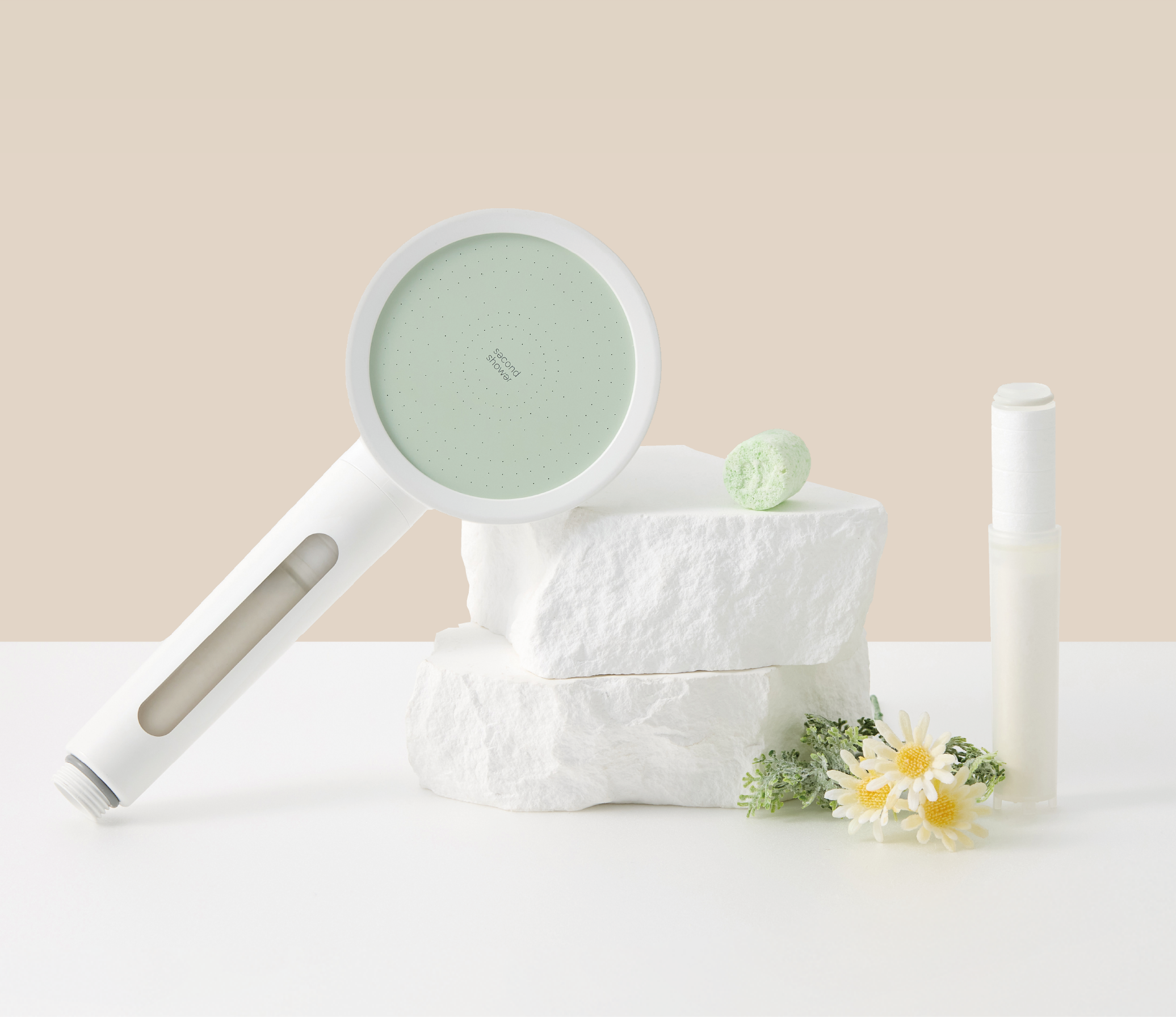
Vitamin C neutralization chamber: The core filter contains pharmaceutical-grade L-ascorbic acid (Vitamin C) in a high-surface-area matrix. As water flows through, chlorine (HOCl) and chloramine (NH₂Cl) react instantly: C₆H₈O₆ + HOCl → C₆H₆O₆ + H₂O + Cl⁻. This is a stoichiometric reduction reaction—one ascorbic acid molecule neutralizes one halogen molecule. The byproducts are dehydroascorbic acid (harmless oxidized Vitamin C), water, and chloride ions (the same chloride in table salt). Unlike KDF galvanic media or activated carbon, Vitamin C stays consistent through the cartridge's peak performance window or saturate until it's chemically exhausted. Independent lab testing confirms 99.9% chlorine and chloramine removal from Day 1 through Day 60 at 2.5 GPM flow and 10-minute shower duration (25 gallons per shower, 1,500 gallons total per filter). After Day 60, removal efficiency drops below 90%, triggering replacement.
NSF/ANSI 42 certified* sediment pre-filter: Before water reaches the Vitamin C chamber, it passes through a 5-micron polypropylene (PP) depth filter. This captures suspended particles—sand, rust, sediment—that would otherwise clog the Vitamin C matrix and reduce contact efficiency. The PP filter is NSF/ANSI 42 certified for particulate reduction. Removing sediment upfront extends the Vitamin C filter's effective life and reduces the visible particles that contribute to mineral buildup on glass. It doesn't soften water (that requires ion-exchange), but it clarifies it.
176 micro-jet spray plate: Filtered water exits through 176 precision-drilled micro-jets (0.3mm diameter each). This does three things: (1) Maintains full water pressure—no backpressure from the filter media, no flow restriction. Total flow is 2.5 GPM (or 1.8 GPM with the included California-compliant regulator). (2) Aerates the water into a fine mist, increasing surface area for the final Vitamin C infusion (see below). (3) Creates the "spa shower" feel—high-velocity micro-streams that feel stronger than standard showerheads despite using the same volume. Competitor filters with dense cartridge media drop pressure by 30-50% because they force water through restrictive pathways. Second Shower's flow-through design eliminates this.
5-Vitamin infusion on exit: After filtration and just before the spray plate, water passes through a vitamin infusion chamber containing Vitamin C (ascorbic acid), Vitamin E (tocopherol), Niacinamide (Vitamin B3), Panthenol (Vitamin B5), and Biotin (Vitamin B7). These are water-soluble or emulsified forms that dissolve into the mist. The concentrations are cosmetic-grade—not medical—so effects are topical hydration and antioxidant support, not therapeutic. This differentiates Second Shower from pure-filtration competitors (Jolie, AquaBliss) and positions it as a skincare step, not just a water treatment. The vitamins don't remove contaminants; they're a post-filter enhancement.
Tool-free installation: The showerhead unscrews from your existing shower arm (the pipe coming out of the wall) by hand—no wrench, no plumber. You screw Second Shower onto the same threads (standard US 1/2" NPT fitting). Includes thread tape and a flow regulator for states with 1.8 GPM maximums (California, New York, etc.). Renter-friendly: no landlord permission needed, no permanent modification. When you move, unscrew it and take it with you. Installation time: 3-5 minutes.
What this solves for you: If white buildup on your shower door is accompanied by dry skin, itchy scalp, fading hair color, or chlorine smell, your water chemistry—not just hardness—is the problem. A shower filter won't soften water (calcium and magnesium stay dissolved), so you'll still see some mineral residue on glass. But it will remove the chlorine and chloramine that are oxidizing your skin lipids and hair keratin, eliminate the chloroform gas you're inhaling, and stop the chemical irritation driving post-shower dryness and sensitivity. The sediment filter reduces visible particles, so buildup is less frequent and easier to clean (minerals alone are easier to remove than minerals + soap scum + chlorinated organics). For the white door film, you'll still need a weekly cleaning routine (vinegar or citric acid dissolves calcium carbonate). But your skin and hair will recover within 2-4 weeks of switching to filtered showers.
Next Step
Use a verified product path and track outcomes over the first replacement cycle.
Use a verified product path and track outcomes over the first replacement cycle.
Vitamin C wall-mount filter — 99.9% chlorine and chloramine reduction during the cartridge's peak performance window (Day 1–60). $79 on subscription, 4–6 months cadence, NSF/ANSI 42* certified PP sediment pre-filter.
Shop the Second ShowerheadRelated Reading
FAQ
Does a shower filter remove the white buildup on my shower door?
No—the white buildup is hard water scale (calcium and magnesium deposits), which a shower filter doesn't remove because those minerals stay dissolved in the water. Only a water softener (ion-exchange system) removes hardness. However, a shower filter removes chlorine, chloramine, and heavy metals, which prevents the buildup from being compounded with chlorinated organics (the filmy, hard-to-clean layer on top of the mineral deposits). With filtered water, you'll still see some white residue, but it will be easier to wipe away with vinegar or a mild acid cleaner. The real benefit of the filter is protecting your skin and hair from chlorine damage, not eliminating door buildup.
How do I remove existing white buildup from my shower door?
White hard water scale is calcium carbonate (CaCO₃), which dissolves in acid. Spray undiluted white vinegar (5% acetic acid) on the glass, let it sit for 10-15 minutes, then scrub with a non-abrasive sponge. For stubborn buildup, make a paste of baking soda and vinegar, apply it, let it sit for 20 minutes, and scrub. For severe scale, use a commercial descaler containing citric acid or phosphoric acid (CLR, Lime-A-Way). Always rinse thoroughly after. To prevent re-buildup, squeegee your door after every shower—this removes 90% of the water before minerals can precipitate. A daily squeegee routine + weekly vinegar spray keeps doors clear even with hard water.
Will a Vitamin C shower filter soften my water?
No. Water softening removes dissolved calcium and magnesium ions (hardness) through ion-exchange—swapping Ca²⁺ and Mg²⁺ for sodium (Na⁺) ions using a resin bed. This requires a whole-house system installed at your water main, costing $500-$2,500. A Vitamin C shower filter neutralizes chlorine and chloramine through a chemical reaction (ascorbic acid + halogen → harmless byproducts), but it doesn't alter mineral content. Your water will still be hard—you'll still see scale on fixtures—but it won't contain the oxidative chemicals that damage skin and hair. If your primary concern is soft water for cleaning and appliance longevity, you need a softener. If your concern is skin dryness and hair damage, you need a chlorine filter. They solve different problems.
How often do I need to replace a shower filter if I have hard water?
Filter replacement depends on filtration chemistry, not water hardness. Hard water (high mineral content) doesn't shorten Vitamin C filter life because minerals don't react with or exhaust ascorbic acid—only chlorine and chloramine do. Second Shower's filter lasts 60 days of daily use (one 10-minute shower per day at 2.5 GPM = 1,500 gallons total). After 60 days, the Vitamin C supply is depleted and removal efficiency drops below 90%—that's when you replace it. The NSF/ANSI 42 certified* sediment pre-filter may clog faster in very hard water with high suspended particles (rust, sand), but the Vitamin C chamber isn't affected by dissolved minerals. KDF filters (used by competitors) do degrade faster in hard water because calcium and magnesium can precipitate onto the zinc-copper alloy surface, blocking reactive sites—but that's a flaw of galvanic media, not a universal shower filter issue.



Leave a comment
All comments are moderated before being published.
This site is protected by hCaptcha and the hCaptcha Privacy Policy and Terms of Service apply.