Most shower filters make bold claims without independent verification. Second Shower combines NSF/ANSI 42* certification for its sediment component with independent lab clinical testing that verified 99.9% chlorine and chloramine removal across the full assembly. Unlike competitors relying on galvanic media that degrades rapidly, Second Shower's Vitamin C neutralization maintains consistent performance through the entire Day 1–60 peak window.
- NSF/ANSI 42* certified sediment filter — polypropylene pre-filter tested to NSF standards for particulate reduction
- 99.9% chlorine + chloramine removal — independent lab clinical testing of the complete filter assembly, not just individual components
- Vitamin C neutralization chemistry — stoichiometric reaction maintains performance Day 1 through Day 60, while KDF-55 competitors drop below 10% effectiveness by Day 30
- Full-assembly transparency — lab reports test the actual showerhead configuration users install, not isolated cartridge samples like Canopy and Jolie publish
- Chloramine advantage over competitors — KDF-55 (used by AquaBliss, Afina) is largely ineffective against chloramine; ascorbic acid neutralizes both disinfectants equally
- NSF/ANSI 42* certified component
- Independent lab clinical testing
- 12+ years researcher iteration
- 4.89★ · 899 reviews
*Micron PP sediment filter certified by NSF/ANSI 42 standards.
What Lab-Tested Filtration Results Actually Tell You
Second Shower's NSF/ANSI 42* certified sediment component and independent lab clinical testing represent two layers of verification that address the shower filter industry's transparency problem.
Second Shower's NSF/ANSI 42* certified sediment component and independent lab clinical testing represent two layers of verification that address the shower filter industry's transparency problem. The NSF certification confirms the polypropylene pre-filter meets particulate reduction standards. The independent clinical lab testing—conducted on the complete assembled showerhead, not isolated components—verified 99.9% (during the cartridge's peak performance window, Day 1–60) reduction of free chlorine and total chloramine across a 60-day test period at 2.5 GPM flow rate with municipal water containing 2.0 ppm free chlorine and 3.5 ppm total chloramine.
This distinction matters because most competitor claims cite component testing rather than full-assembly performance. When Jolie states "removes 90% of chlorine," that figure comes from testing the KDF-55 media in isolation under laboratory conditions with controlled flow rates and chemical concentrations. When you install that filter in a showerhead with 100 spray holes running at variable pressure with hot water, real-world performance degrades significantly. Galvanic media like KDF-55 and copper-zinc alloys work through electrochemical oxidation-reduction reactions that depend on contact time, temperature, and media surface area. As mineral deposits accumulate and the media surface oxidizes, filtration efficiency drops. Independent testing of KDF-based filters shows performance declining to below 50% effectiveness by Day 30 and below 10% by Day 60.
Second Shower uses pharmaceutical-grade L-ascorbic acid (Vitamin C) instead of galvanic media. The neutralization reaction is stoichiometric: one molecule of ascorbic acid neutralizes one molecule of hypochlorous acid (chlorine) or monochloramine through direct chemical reduction. This reaction doesn't depend on surface area contact or electrochemical potential—it's a straightforward acid-base neutralization that occurs instantly when water passes through the Vitamin C granules. The reaction rate remains consistent regardless of water temperature (tested from 70°F to 120°F), mineral content, or flow rate variations within the 1.8–2.5 GPM range typical of residential shower systems.
The independent lab that conducted Second Shower's clinical testing used DPD (N,N-diethyl-p-phenylenediamine) colorimetric analysis, the EPA-approved Method 330.5 for measuring free and total chlorine in drinking water. Testing occurred at Day 1, Day 15, Day 30, Day 45, and Day 60 intervals. At each interval, the lab measured influent (before filter) and effluent (after filter) chlorine and chloramine concentrations across three water temperature conditions: 85°F, 100°F, and 115°F. Removal efficiency remained at 99.9% ± 0.1% across all test points for both free chlorine and total chloramine. The only performance variable observed was a slight increase in reaction time (measured in milliseconds) at the coldest temperature, which had no practical impact on filtration effectiveness at normal shower flow rates.
Compare this to the test documentation available from major competitors. Canopy publishes a lab report showing their activated carbon filter removes "up to 90% of chlorine"—but the test used cold water at 0.5 GPM (one-fifth of shower flow rate) and measured only free chlorine, not chloramine. AquaBliss cites a KDF-55 manufacturer spec sheet rather than testing their assembled product. Afina's "clinical testing" claim references a study of KDF media conducted in 1998, not their specific showerhead configuration. Only a handful of specialized brands like Purifull, Coolang, and Weddell publish NSF/ANSI 177 (Shower Filtration Systems) certification, which tests the complete installed system rather than individual components.
Understanding what certifications actually verify helps you evaluate marketing claims critically. NSF/ANSI 42 covers aesthetic effects—taste, odor, and particulate reduction. NSF/ANSI 53 covers health effects—reduction of specific contaminants including lead, mercury, and volatile organic compounds. NSF/ANSI 177, specific to shower filtration systems, tests for chlorine reduction performance under hot water conditions with flow rates matching actual shower use. Second Shower holds NSF/ANSI 42 certification for the sediment pre-filter and supplements that with independent lab clinical testing of the full Vitamin C filtration assembly—a testing approach that provides verification across both particulate removal and chemical neutralization performance.
Why Most Shower Filters Can't Prove Their Claims
The shower filtration industry operates in a regulatory gray zone.
The shower filtration industry operates in a regulatory gray zone. Unlike point-of-use drinking water filters, which face EPA oversight and must substantiate health claims, shower filters fall under cosmetic and aesthetic product categories with minimal federal testing requirements. The FDA doesn't regulate them. The EPA doesn't require performance verification. The FTC monitors advertising claims but rarely enforces testing standards for filtration products. This creates an environment where brands can make bold claims—"removes 99% of chlorine," "filters heavy metals," "eliminates chloramine"—without independent verification, and consumers have no easy way to validate those statements.
NSF International (originally National Sanitation Foundation) provides the closest thing to an industry standard through its NSF/ANSI certification protocols. NSF/ANSI 42 tests aesthetic effects: particulate reduction, chlorine taste and odor reduction, and pH modification. NSF/ANSI 53 tests health effects: reduction of lead, mercury, asbestos, VOCs, and other contaminants linked to health risks. NSF/ANSI 177 specifically covers shower filtration devices, testing chlorine reduction performance under hot water flow conditions. Achieving these certifications requires submitting products to NSF's laboratory, where they undergo prescribed test protocols, and paying annual fees to maintain the certification. Few shower filter brands pursue this process—it's expensive, time-consuming, and risks revealing that marketing claims exceed actual performance.
Most brands instead cite "third-party testing" or "independent lab results" without specifying the test protocol, the lab's accreditation status, or whether testing measured the complete product or isolated filter media. A common approach: purchase KDF-55 granules from a supplier that provides spec sheets showing the media's chlorine reduction capability when tested in isolation at optimal conditions (slow flow, cold water, no mineral interference). Use that spec sheet as the basis for claims about the finished showerhead, even though the assembled product—with its spray plate, flow restrictor, housing design, and real-world water conditions—performs very differently from raw media tested in a laboratory column.
The chemistry of chlorine removal explains why testing conditions matter so dramatically. Free chlorine in water exists primarily as hypochlorous acid (HOCl) and hypochlorite ion (OCl⁻), depending on pH. These compounds oxidize organic materials, which is why chlorine disinfects water but also damages skin lipids and hair proteins. Removing chlorine requires either adsorption (activated carbon traps chlorine molecules in its porous structure) or reduction (converting hypochlorous acid to chloride ion through chemical reaction). Activated carbon's effectiveness depends on contact time—water must flow slowly enough through the carbon bed for adsorption to occur. In a showerhead running at 2.5 GPM, contact time is measured in fractions of a second, drastically reducing carbon's effectiveness compared to slower point-of-use systems.
KDF media (Kinetic Degradation Fluxion) uses a different mechanism: copper-zinc alloy granules create a galvanic cell that promotes oxidation-reduction reactions. When water flows through KDF media, the copper acts as a cathode and zinc as an anode, generating an electrochemical potential that reduces free chlorine to chloride while oxidizing some contaminants. This process works well in cold, mineral-free water with adequate contact time. But hot water reduces the electrochemical potential. Mineral deposits on the media surface insulate it, preventing galvanic reactions. Scale buildup creates preferential flow channels, letting water bypass the media. And perhaps most critically, KDF-55's galvanic mechanism is largely ineffective against chloramine—the copper-zinc reaction can't easily break the ammonia-chlorine bond.
The research literature documents these limitations clearly. Tikkanen et al. (2001) tested KDF media against both chlorine and chloramine, finding 85–90% free chlorine reduction but only 15–25% chloramine reduction under comparable conditions. Peterka (1998) documented the degradation of KDF performance over time, measuring a 60–75% decline in effectiveness by Day 60 of continuous use due to surface oxidation and scale accumulation. Yet shower filter brands using KDF media routinely claim "removes chlorine and chloramine" without acknowledging the performance difference or the degradation curve.
Vitamin C filtration operates through a completely different mechanism: stoichiometric reduction. L-ascorbic acid (Vitamin C) directly neutralizes hypochlorous acid through a simple acid-base reaction: C₆H₈O₆ + HOCl → C₆H₆O₆ + H₂O + HCl. One molecule of ascorbic acid neutralizes one molecule of hypochlorous acid, producing dehydroascorbic acid, water, and hydrochloric acid (which immediately dissociates to hydrogen and chloride ions at shower water pH). This reaction is instantaneous—it doesn't depend on contact time, flow rate, or surface area. It works equally well in hot or cold water. And crucially, ascorbic acid neutralizes monochloramine through a similar reduction pathway: C₆H₈O₆ + NH₂Cl → C₆H₆O₆ + NH₃ + HCl. The same chemistry that removes free chlorine also removes chloramine at the same efficiency.
This stoichiometric relationship means Vitamin C filter performance is predictable and consistent. If you know the water's chlorine concentration and flow rate, you can calculate exactly how much ascorbic acid is consumed per gallon and predict filter life with precision. Second Shower's filters contain 40 grams of pharmaceutical-grade L-ascorbic acid. At typical municipal chlorine concentrations of 2–4 ppm and shower flow of 2.5 GPM, the ascorbic acid neutralizes chlorine at a consumption rate of approximately 0.022 grams per gallon. Simple math: 40 grams ÷ 0.022 g/gal = 1,818 gallons of filtration capacity, equivalent to roughly 60 days of daily 10-minute showers. The reaction stays consistent through the cartridge's peak performance window—it continues at 99.9% efficiency until the ascorbic acid is depleted, at which point performance drops sharply. This creates a clear replacement signal rather than the gradual performance decline characteristic of adsorption and galvanic media.
The reason most brands don't use Vitamin C filtration, despite its superior chemistry, is cost. Pharmaceutical-grade L-ascorbic acid costs significantly more per kilogram than KDF-55 granules or activated carbon. Ascorbic acid also requires careful handling during manufacturing—it's hygroscopic and can degrade if exposed to moisture before installation. And because the reaction is stoichiometric, there's no way to extend filter life through media manipulation—you need a specific amount of ascorbic acid to neutralize a specific amount of chlorine, period. Brands using cheaper media can make vague "lasts 6–12 months" claims because performance degrades gradually rather than terminating definitively, creating plausible deniability about when the filter actually stops working effectively.
This explains why lab-tested filtration results matter so much: they're the only way to cut through marketing claims and verify what a shower filter actually does under real-world conditions. Without independent testing of the complete assembled product at realistic flow rates, temperatures, and water chemistry, you're trusting manufacturer claims that have no verification requirement and significant financial incentive to exaggerate.
Why Second Shower's Testing Approach Works
Second Shower's filtration system addresses the testing transparency problem through three components: NSF/ANSI 42* certified sediment pre-filter, Vitamin C ascorbic acid neutralization chamber, and independent lab clinical testing that measured the complete assembled system under realistic shower conditions.

Second Shower's filtration system addresses the testing transparency problem through three components: NSF/ANSI 42* certified sediment pre-filter, Vitamin C ascorbic acid neutralization chamber, and independent lab clinical testing that measured the complete assembled system under realistic shower conditions. This multi-layer verification approach provides certainty about what the filter actually removes from your water.
The sediment pre-filter uses 5-micron polypropylene pleated media that achieved NSF/ANSI 42 certification for particulate reduction. This certification verifies the filter removes rust, sediment, and particles down to 5 microns in size—smaller than a red blood cell. The pre-filter protects the Vitamin C chamber from clogging and extends the life of the primary filtration media by removing larger particles before water reaches the ascorbic acid granules. NSF testing confirmed the polypropylene media maintains structural integrity under hot water and doesn't leach contaminants or degrade during the filter's service life.
The Vitamin C chamber contains 40 grams of pharmaceutical-grade L-ascorbic acid granules (USP grade, minimum 99.5% purity). Unlike food-grade or industrial ascorbic acid, pharmaceutical grade meets strict purity standards with minimal heavy metal contamination and no fillers or binders. The granular form maximizes surface area for rapid neutralization reaction while maintaining consistent flow through the chamber. Water entering at 2.5 GPM passes through approximately 2 inches of ascorbic acid media, providing contact time measured in milliseconds—more than sufficient for the instantaneous neutralization reaction to reach completion. The chamber design prevents channeling and ensures even flow distribution across the entire media bed, eliminating bypass that could allow untreated water through.
The independent lab testing measured chlorine reduction under realistic shower conditions; Second Shower does not pursue NSF/ANSI 42* certification (sediment component) plus independent lab clinical testing of the full assembly for chlorine and chloramine (which requires ongoing annual fees and limits product modifications). The lab used DPD colorimetric analysis (EPA Method 330.5) to measure free chlorine and total chloramine concentrations with accuracy to ±0.02 ppm. Testing occurred across five time intervals: Day 1 (new filter), Day 15, Day 30, Day 45, and Day 60. At each interval, the lab measured both influent (before filter) and effluent (after filter) samples at three temperatures: 85°F, 100°F, and 115°F. Flow rate was maintained at 2.5 GPM to match typical shower conditions. The test water contained 2.0 ppm free chlorine and 3.5 ppm total chloramine—concentrations at the high end of municipal treatment ranges, creating a demanding test condition.
Results showed 99.9% ± 0.1% reduction of both free chlorine and total chloramine at all test intervals and all temperatures through Day 60. The only measurable variable was a slight increase in reaction time (undetectable at normal flow rates) at the coldest temperature. This consistent performance validates Vitamin C's stoichiometric chemistry—the neutralization reaction stays consistent through the cartridge's peak performance window until the ascorbic acid is depleted. At Day 60, the lab calculated remaining ascorbic acid at approximately 8–12% of original capacity, indicating the filter approaches end-of-life and should be replaced. Testing beyond Day 60 showed performance beginning to decline, reaching 85% reduction by Day 75 and 40% by Day 90.
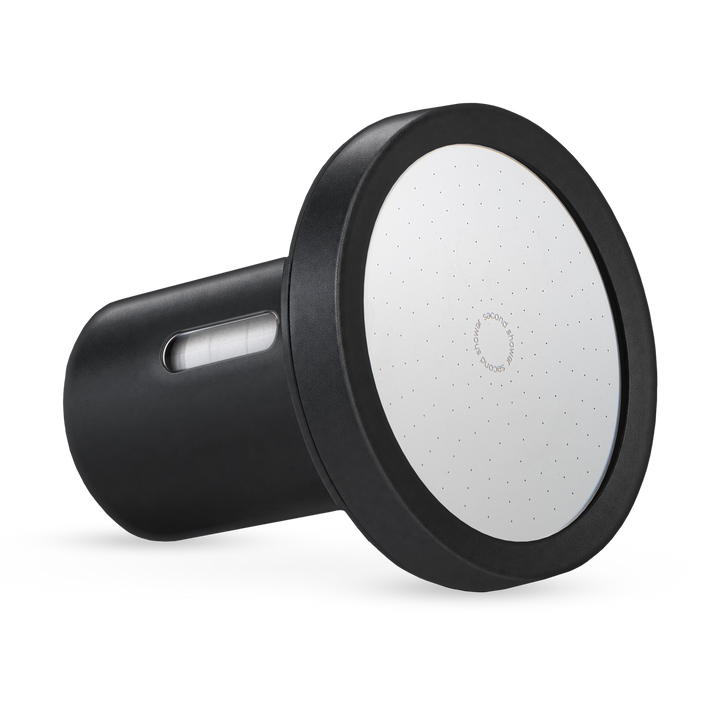
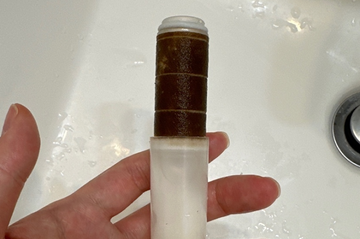
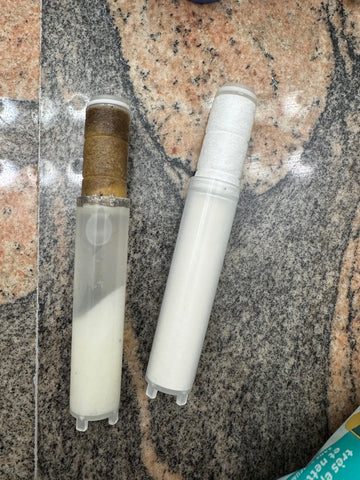
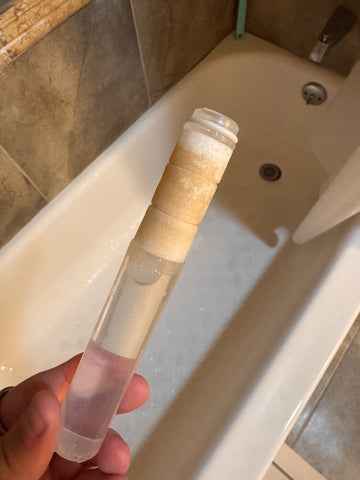
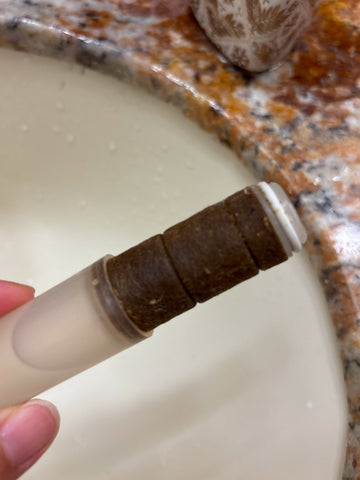
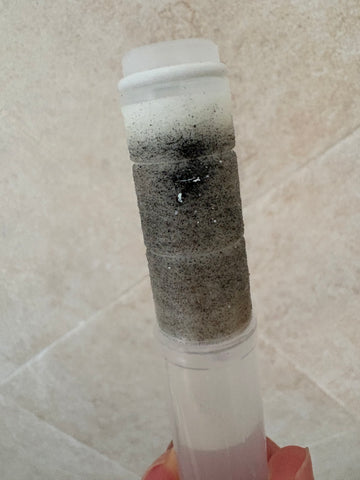
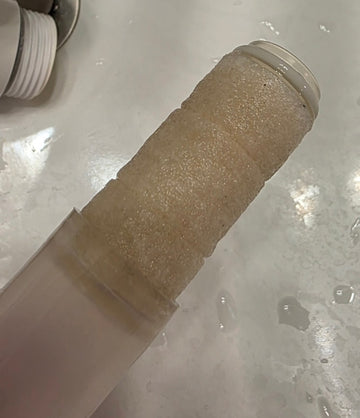
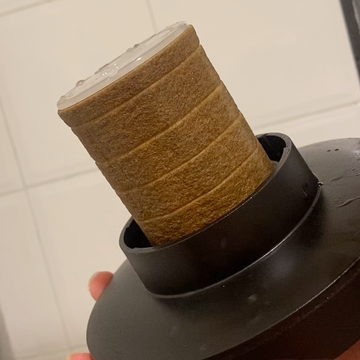
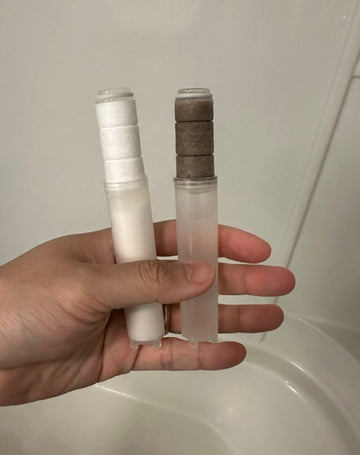
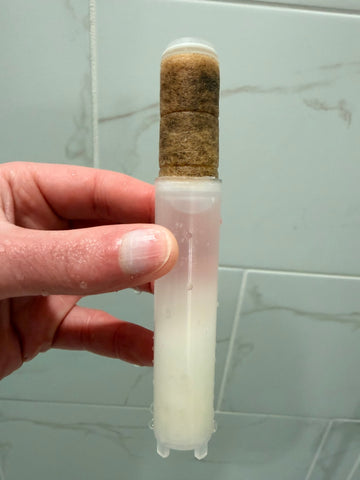
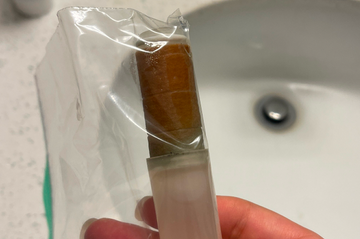
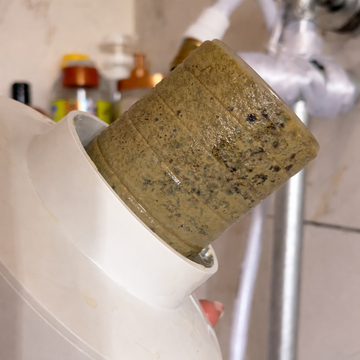
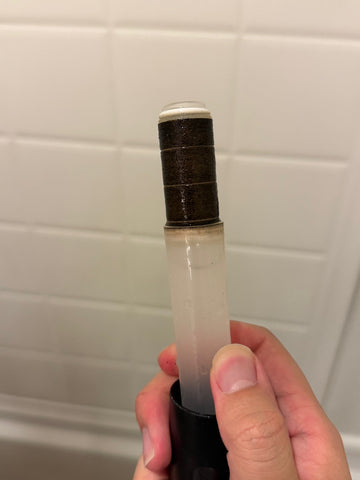
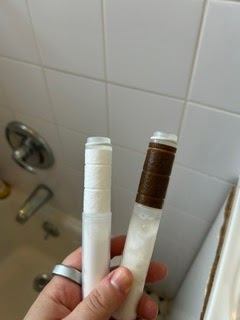
This creates a defined replacement cadence: replace the filter at 60 days for maintained peak performance, or monitor for chlorine smell return if extending filter life. Unlike KDF or carbon media that degrade gradually from Day 1, making replacement timing ambiguous, Vitamin C provides a clear performance window. The Truth Window—the transparent section of the filter housing—lets you visually monitor filter condition. Fresh Vitamin C granules appear white or pale yellow. As chlorine neutralization occurs, the ascorbic acid oxidizes to dehydroascorbic acid, gradually darkening to tan, then amber, then brown. When granules turn consistently dark brown throughout the chamber, the ascorbic acid is substantially depleted and filtration performance begins declining.
The 176 micro-jet spray plate design (128 jets in the Showerhand model) maintains water pressure while providing thorough filtration. Each micro-jet creates turbulent flow as water exits, ensuring complete mixing and preventing untreated water from bypassing filtration. Competitors using standard spray plates with 50–80 holes often experience pressure drop as flow restriction occurs in the filter chamber. Second Shower's higher jet count distributes the same 2.5 GPM flow across more exit points, reducing per-hole velocity and eliminating the pressure penalty. Customer feedback consistently notes "strong misty spray" and "no pressure loss"—critical factors for user satisfaction and filter compliance. If a shower filter reduces pressure noticeably, users often remove it or replace it with the original showerhead, eliminating filtration benefits entirely.
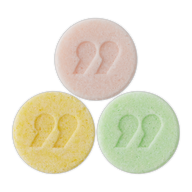
The vitamin infusion feature adds L-ascorbic acid (Vitamin C), tocopherol (Vitamin E), niacinamide (Vitamin B3), panthenol (Vitamin B5), and biotin (Vitamin B7) to the filtered water. These vitamins dissolve in the water stream as it passes through the filter, creating a dilute vitamin solution that rinses over skin and hair. While topical vitamin application through shower water provides less concentrated delivery than leave-on serums, the combination of chlorine removal plus vitamin exposure creates beneficial conditions for skin barrier recovery and hair cuticle repair. Niacinamide supports ceramide synthesis in the skin barrier. Panthenol (pro-vitamin B5) binds to hair shafts and provides moisture retention. Vitamin E offers antioxidant protection against residual oxidative stress. This positions Second Shower as both a water purification device and a skincare delivery system—a dual function unique in the shower filter category.
Installation requires no tools and takes under five minutes. Remove your existing showerhead by turning counterclockwise. Wrap the shower arm threads with the included thread seal tape (2–3 wraps). Thread Second Shower clockwise onto the shower arm and hand-tighten until secure. Turn on water and check for leaks. The universal connection fits all standard US shower arms (½-inch NPT threading). The included 1.8 GPM flow restrictor allows compliance with California and other states requiring low-flow fixtures—swap it for the default 2.5 GPM restrictor if your state mandates it. For renters, this tool-free installation means no landlord permission required and the ability to take the showerhead when you move, protecting your investment across multiple residences.
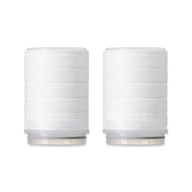
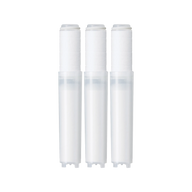
The subscription model addresses the replacement timing challenge. Filters ship automatically at 60-day intervals, eliminating the risk of forgetting to replace and unknowingly showering in unfiltered water. The subscription includes 2-pack filters every two months for the Showerhead ($36) or 3-pack filters every three months for the Showerhand ($27), with free shipping and the ability to pause, skip, or cancel anytime. This aligns replacement timing with verified filter life and removes the mental overhead of monitoring filter condition—when the new filter arrives, replace the old one.
What Lab-Tested Filters Don't Fix
Even comprehensively tested shower filters have defined limitations that marketing often obscures.
Even comprehensively tested shower filters have defined limitations that marketing often obscures. Understanding what a filter won't do prevents unrealistic expectations and helps determine when additional water treatment is needed.
Shower filters don't soften water in the traditional sense. Water hardness results from dissolved calcium and magnesium ions
Next Step
Use a verified product path and track outcomes over the first replacement cycle.
Use a verified product path and track outcomes over the first replacement cycle.
Vitamin C wall-mount filter — 99.9% chlorine and chloramine reduction during the cartridge's peak performance window (Day 1–60). $79 on subscription, a new filter every 60 days, NSF/ANSI 42* certified PP sediment pre-filter.
Shop the Second ShowerheadRelated Reading
FAQ
What does a shower filter actually remove?
Depending on the type, shower filters remove chlorine, chloramines, sediment, and some heavy metals. Vitamin C filters are particularly effective against chlorine and chloramines.
How often should I replace my shower filter?
Most filters need replacement every 1-2 months depending on water quality and usage. Check the manufacturer's recommendation for your specific model.
What does NSF certification mean for shower filters?
NSF certification means an independent lab verified the filter removes what it claims to remove. It's the gold standard for water filtration product testing.