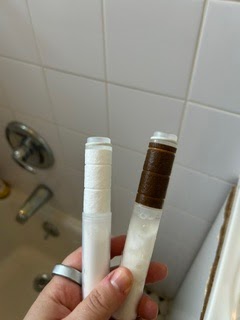
A shower filter is a device you buy once and a filter you buy for years, so a Black Friday or Cyber Monday price only tells you half the cost. Judge the deal on year-one cost: the sale price of the device plus every filter you will need in the first twelve months, at the price you will pay after the sale ends.
- Do the math at one purchase tier. Compare every option either at its one-time price or at its subscription price, never one of each.
- Check what happens after the sale. Filter price, how often you need one, and whether a subscription price holds after the first order.
- Look up the certification yourself. NSF/ANSI 177 covers free chlorine in shower filters; NSF/ANSI 42 is a drinking water standard often applied to one component. "Tested to NSF standards" is not a listing.
- If your city uses chloramine, ask for a published chloramine result. A 177 listing does not cover it.
- Read returns and warranty before you pay, and confirm the device fits your shower arm.
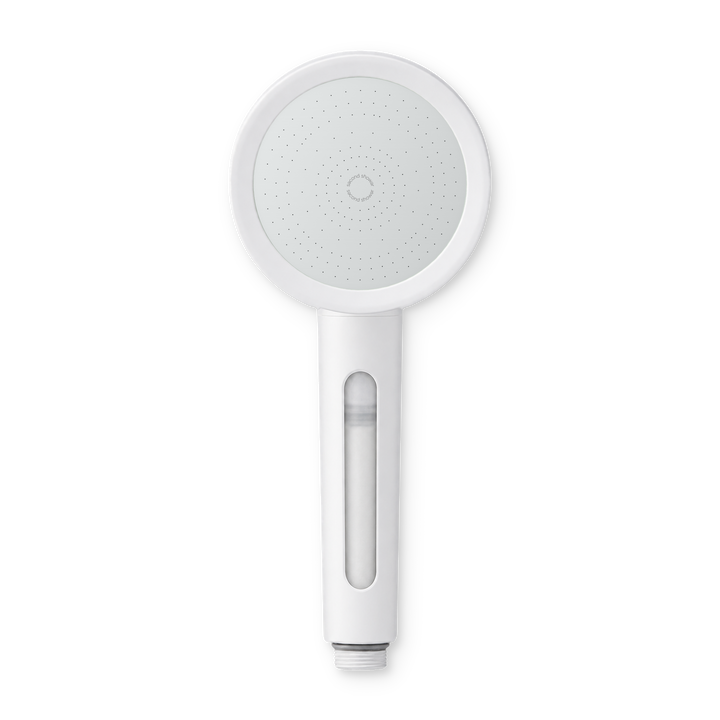
Our own numbers, so you can run the same checks on us: the Second Showerhand costs $177 in year one on a filter subscription, and the Second Showerhead $187, at our October 2026 prices.
Year-one cost: the only number that settles a deal
A sale cuts the price of the device. The filter keeps costing what it costs. If you only compare the device, you are comparing the smaller part of the bill.
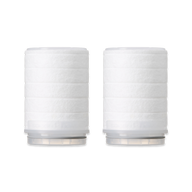
The formula is short: device price + (filters needed in year one x filter price) + shipping on filter orders. Filters needed in year one depends on the maker's recommended interval. A filter replaced every 60 days means about six a year; every 30 days, about twelve. Check whether a filter comes in the box, and whether filters are sold singly or in packs.
That arithmetic is why a big banner on the device can still lose to a full-price option with cheaper filters: the filter line repeats every year, the device line does not. Run it for every option on your list before you look at the banner.
The takeaway: write down one number per product, year-one cost at the same purchase tier, and let that number decide.
The filter price after the sale ends
Holiday pricing usually targets the device. Before you buy, find three things on the product page or in the FAQ:
- The regular filter price, one-time and on subscription. That is what you will pay for the next year or two.
- The recommended interval. A cheap filter that needs replacing twice as often is not cheap.
- What a subscription locks in. Some subscription discounts apply only to the first order, or only while you stay subscribed. Read whether you can skip, pause or cancel, and whether that costs anything.
Then check the "was" price. Under the FTC's Guides Against Deceptive Pricing, a former price used in a comparison should be the actual price the product was openly offered at for a reasonably substantial period, not a number set high so it can be cut. A quick way to test it: look at what the product cost in September. If the "was" price never appeared, the discount is smaller than it looks.
Certification: what to look for and how to check it
Shower filter listings use certification words loosely. Three phrases mean three different things:
| What the listing says | What it means | What to check |
|---|---|---|
| NSF/ANSI 177 certified | The shower filter standard. It covers free available chlorine reduction, plus materials, structure and flow, over the filter's rated life. | The model in a certifier's public listing, with 177 next to it. |
| NSF/ANSI 42 certified | A drinking water standard for aesthetic effects such as chlorine taste and odor and particulates. On a shower filter it often applies to one component. | Which part is certified, and for which substance. |
| "Tested to NSF standards" | The brand's own statement. Not a certification. | Who tested it, what was measured, and whether the result is published. |
How to check a listing. NSF keeps a public database of certified drinking water treatment products at info.nsf.org/Certified/DWTU/, searchable by company, brand or model. A listing shows the standard and the substances the product is certified to reduce. One catch: a certified component is listed under the name of the company that makes it, so a brand that uses a certified part may not appear under its own name. In that case, ask the brand which part is certified, to which standard, for which substance.
What our certification covers. We use an NSF/ANSI 42* certified filter: the micron PP sediment pre-filter, the first of our two stages. We are not NSF/ANSI 177 certified. Our chlorine and chloramine figures come from independent lab testing of the full filter, and we keep the two facts apart.
*Micron PP sediment filter certified by NSF/ANSI 42 standards.
Chloramine: the question most deals skip
Many US utilities disinfect with chloramine instead of chlorine, because it lasts longer in the pipes (US EPA). Your utility's annual water quality report says which one it uses. That matters for a shower filter, because NSF/ANSI 177 covers free chlorine only: a 177 listing says nothing about chloramine. If your report says chloramine, look for a filter that publishes a chloramine result, and treat silence as a no.
We built our filter for chloramine first. Behind the sediment pre-filter sits a Vitamin C core, which reacts with free chlorine and chloramine on contact, fast enough for water that spends only a moment inside a shower filter. In independent lab testing the filter reduced chloramine by 99.9% and free chlorine by 99.9%. In our own testing it held that result through Day 1-60 in the Second Showerhead and Day 1-30 in the Second Showerhand, the peak window of each. Our chloramine guide goes deeper.
Returns and warranty: read them before checkout
A holiday purchase often gets opened weeks later, so the return window matters more than usual. Check four things:
- When the window starts, from order or from delivery, and how long it runs.
- Whether sale items are returnable on the same terms.
- Who pays return shipping, and whether used filters can come back (usually not, for hygiene).
- What the warranty covers and for how long, and whether you need to register.
Ours: 30 days from delivery to request a return, and sale and discounted items are returnable under the same conditions. Orders placed with a filter subscription get free returns within 30 days; on one-time purchases you pay return postage, and return shipping for a validated defect is always free. Used filters cannot be returned. Every Second Showerhead and Second Showerhand has a 1-year warranty, lifetime while a filter subscription is active; register the device to use it.
Fit and install: make sure it goes on your shower
A deal on a filter that does not fit is a return. Before you buy:
- Thread. Most US shower arms use a standard 1/2 inch NPT thread. The Second Showerhead uses that standard mount.
- Fixed or handheld. A handheld is easier for rinsing hair, kids, pets or the tub; the Second Showerhand comes with its hose and an infuser. A fixed head is the simpler daily shower. Our filtered shower head guide walks through the choice.
- Flow limits. Some states, California among them, cap shower flow at 1.8 GPM. Each of ours is made in two versions: 2.5 GPM, the US standard, and 1.8 GPM, water-efficient, CEC certified and DOE compliant.
- Renting. Look for a tool-free install with no permanent plumbing changes. Ours install by hand in about a minute.
Subscription math, worked on our own prices
A filter subscription is worth it only if you would buy the filters anyway. Here is the comparison on our October 2026 website prices, at both tiers, so you can see the gap rather than take our word for it:
| Product | Device | Filters | Year one, filter subscription | Year one, one-time |
|---|---|---|---|---|
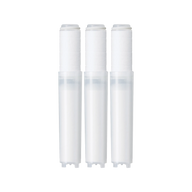
| Second Showerhand | $89, or $69 with a filter subscription | 3-pack $27 on subscription (ships every 3 months), $29 one-time; a new filter every 30 days | $177 | $205, plus shipping |
| Second Showerhead | $99, or $79 with a filter subscription | 2-pack $36 on subscription (ships every 4 months), $39 one-time; a new filter every 60 days | $187 | $216, plus shipping |
A full year on our schedule takes four Showerhand packs (12 filters plus the one in the box) or three Showerhead packs (6 filters plus the one in the box). On subscription, filters ship free every cycle; one-time orders under $40 pay $6.99 shipping, and a single pack is under $40. You can skip, pause or cancel the subscription at any time with no fees, and an active subscription is what turns the 1-year warranty into a lifetime one.
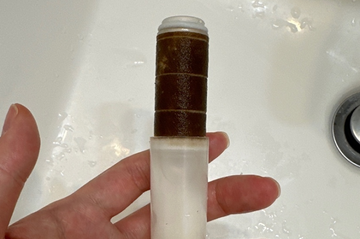
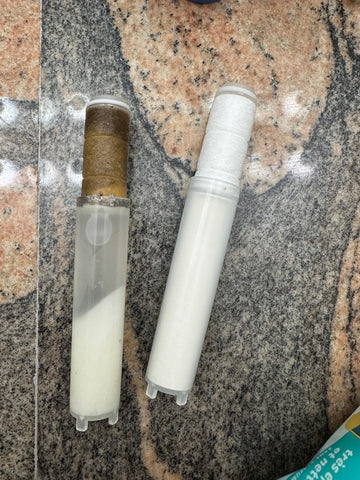
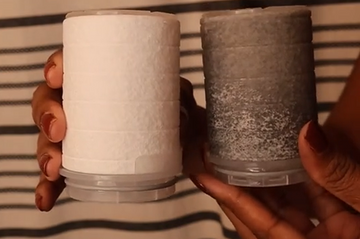
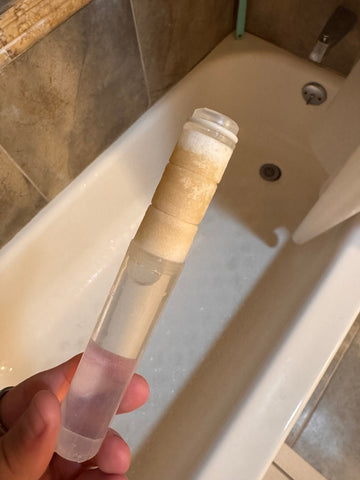
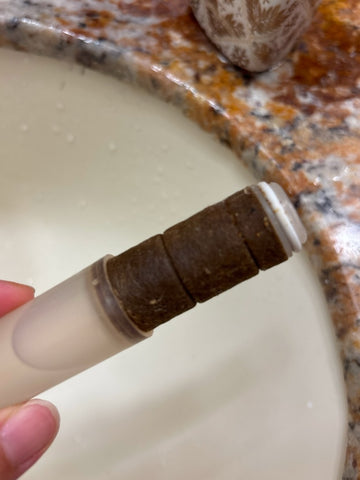
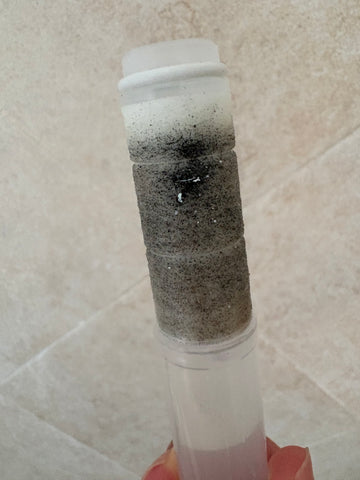
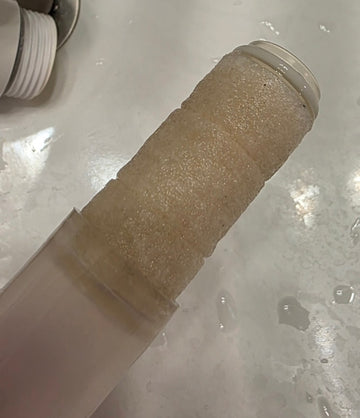
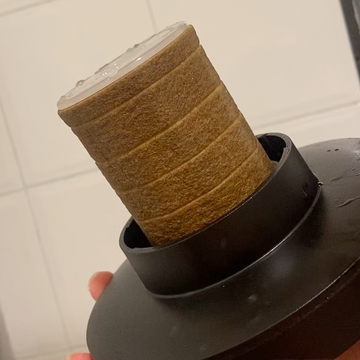
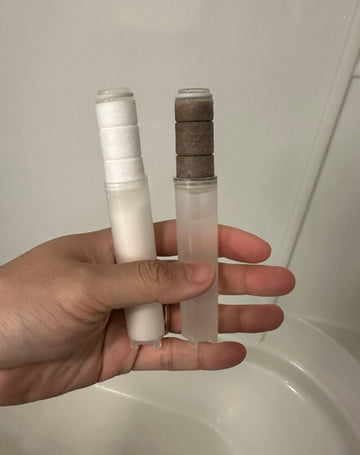
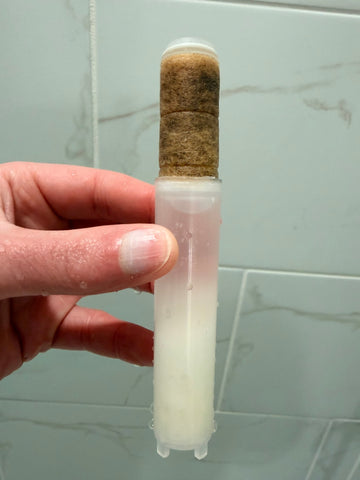
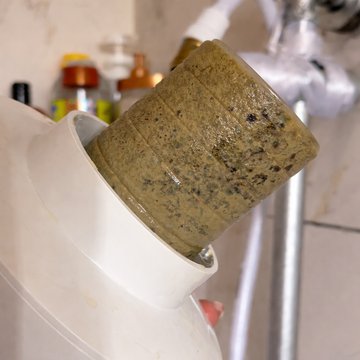
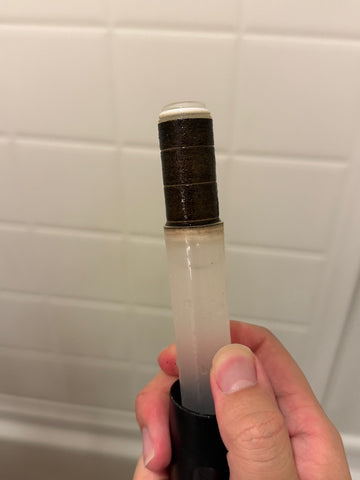
One habit makes either plan cheaper: replace the filter when its period is up, not by eye. The color of a filter does not show how much life is left. Swap it once the 30 or 60 days have passed, because the Vitamin C oxidizes as it works, or sooner if it looks deep brown or black or the pressure drops noticeably. More on that in how to tell when a shower filter needs replacing.
The six-point deal check
| Check | Ask | A good answer |
|---|---|---|
| 1. Year-one cost | Device plus a year of filters, same tier for every option? | One number per product, written down |
| 2. After the sale | Regular filter price and interval? | Published on the product page |
| 3. Certification | Which standard, which part, which substance? | A listing you can find, or a clear answer from the brand |
| 4. Chloramine | Does my utility use it, and is there a result for it? | A published chloramine number |
| 5. Returns and warranty | Window, sale items, return shipping, warranty length? | In writing, before checkout |
| 6. Fit | Thread, flow limit, fixed or handheld? | Matches your shower |
Black Friday falls on November 27 in 2026 and Cyber Monday on November 30. You can run all six checks today, so the only thing left on the day is the price. For people who look twice, that is the whole point.
Which one fits you?
FAQ
Is Black Friday a good time to buy a shower filter?
It can be, if the deal lowers your year-one cost. Add the device price to a year of filters at the price you will pay after the sale, and compare every option at the same purchase tier. A large device discount can still lose to a full-price filter with cheaper refills.
How do I know if a shower filter is really NSF certified?
Look up the model in a certifier's public listing, such as NSF's database at info.nsf.org/Certified/DWTU/. The listing shows the standard and the substances covered. "Tested to NSF standards" is a brand statement, not a certification. If only one component is certified, ask the brand which part and to which standard.
What is the difference between NSF/ANSI 42 and NSF/ANSI 177?
NSF/ANSI 177 is the shower filter standard and covers free available chlorine. NSF/ANSI 42 is a drinking water standard for aesthetic effects such as chlorine taste and odor and particulates, and on shower filters it often applies to one component. NSF/ANSI 177 does not cover chloramine; NSF/ANSI 42 can carry a separate chloramine claim, so check the listing for that word.
Is a filter subscription worth it?
Only if you would buy the filters anyway and can skip or cancel without a fee. On our prices, a filter subscription makes year one $28 to $29 cheaper than buying the same items one-time, before shipping, and subscription filter orders ship free.
Can I return a shower filter I bought on sale?
Check the seller's policy before you pay. At Second Shower, sale and discounted items are returnable under the same conditions: 30 days from delivery, the device in its original packaging, and used filters excluded for hygiene.
How we know
- Federal Trade Commission, Guides Against Deceptive Pricing, 16 CFR Part 233 (233.1, former price comparisons).
- NSF/ANSI 177, Shower Filtration Systems, Aesthetic Effects (scope: free available chlorine).
- NSF/ANSI 42, Drinking Water Treatment Units, Aesthetic Effects (scope: chlorine taste and odor, particulates).
- NSF Certified Products, Drinking Water Treatment Units listings, info.nsf.org/Certified/DWTU/.
- US EPA, Chloramines in Drinking Water.
- Tikkanen MW et al. (2001), Guidance Manual for the Disposal of Chlorinated Water, AWWA Research Foundation Report 90863 (Vitamin C dechlorination).
- Second Shower: independent lab test of the full filter assembly (free chlorine and chloramine, 99.9%); our own peak-window testing (Day 1-60 Showerhead, Day 1-30 Showerhand); prices, subscription terms, return policy and warranty from secondshower.us, October 2026.