Almost certainly, if your shower head screws onto a pipe that comes out of the wall or the ceiling. In the US that pipe, the shower arm, ends in a standard 1/2-inch NPT thread, and the plumbing standard for fittings requires showerheads made for standard arms to connect to it. So the real question is less about the filter and more about what kind of shower you have.
- Fixed head on an arm, or a handheld whose hose starts at the arm: it fits. Both the Second Showerhead and the Second Showerhand screw onto a standard 1/2-inch NPT shower arm by hand, with no adapter, in about a minute.
- Worth a second look: a head set flush into the wall or ceiling with no arm, a handheld fed from the tub spout or a wall outlet, and fixtures bought outside the US.
- Still unsure? Take a photo of your shower arm with the head off and email it to hello@secondshower.us. We will tell you before you buy.
Are shower filters universal?
Close to it, in the US and Canada. The fit is set by a shared standard, not by the filter brand, which is why a shower head from one store usually screws onto an arm installed by a plumber who never heard of it.
The standard. ASME A112.18.1/CSA B125.1 is the North American standard for plumbing supply fittings. It says that showerheads for installation on standard shower arms shall be capable of being connected to a 1/2 NPT male thread (clause 4.4.9). NPT is National Pipe Taper: the threads narrow slightly toward the end, so the joint tightens as you turn it. On a 1/2-inch NPT arm the threaded end measures about 0.84 inches across, a little under an inch, with 14 threads per inch. The "1/2 inch" is the nominal pipe size, not the width you can measure.
Handheld hoses have their own standard too. The same document sets the threads between a hand-held shower and its hose: 1/2-14 NPSM, a straight thread, or the metric G 1/2 (clause 4.4.4). That is why the hose of one handheld often screws onto the handle of another, and also why the rubber washer inside each connection matters more than the brand name on it.
Where "universal" stops. The standard covers the connection, not your bathroom. A filter that screws onto a 1/2-inch arm cannot help a shower that has no arm, and a fixture made for another country may use a different thread. The table below sorts the common setups.
What kind of shower do you have?
| Your setup | How to spot it | Second Showerhead | Second Showerhand |
|---|---|---|---|
| Fixed head on a wall arm | A short pipe angles out of the wall and the head screws onto its end | Fits | Fits |
| Handheld with its hose starting at the arm | A holder or mount screws onto the arm, and the hose runs from there to the handle | Fits, in place of the handheld | Fits: replaces the whole set with its own mount and hose |
| Rain head on a ceiling arm | A pipe drops from the ceiling or reaches out over the tub, and a wide head hangs from it | The thread matches; send a photo to check the angle and reach | The thread matches; send a photo first |
| Handheld on a slide bar fed from a wall outlet | The hose starts at a small outlet in the wall, often below a fixed head | On the fixed arm, if there is one | Send a photo: its mount is made for a shower arm |
| Handheld fed from the tub spout | The hose connects at the bath spout, often with a pull-up diverter | No arm to mount on | Send a photo first |
| Flush-mount or built-in head | The head sits right against the wall or ceiling, with no visible pipe | Not without an arm | Not without an arm |
| Fixture bought outside the US | Imported panel systems, older imported heads, some European kits | Send a photo: the thread may be metric | Send a photo first |
If your shower is in the first two rows, you can stop here: a filtered shower head or handheld made for US arms will screw on.
How to check your shower arm in two minutes
- Unscrew the current head. Turn it counterclockwise, gripping the head rather than the arm. If it is stuck, wrap a cloth around the nut and use a wrench gently. The Second Shower box includes one for exactly this; installing ours needs no tools.
- Look at the end of the arm. A threaded pipe end a little under an inch across, with threads that narrow toward the tip, is the standard 1/2-inch NPT arm. Old tape or scale on the threads is normal; wipe it off.
- Hold the arm while you look. If the arm turns in the wall when you twist the head, hold it steady with your other hand during every step. A loose arm is a plumbing fix, not a filter problem.
- Check for a second outlet. If a hose also starts at the wall or the tub spout, note it. That tells you which row of the table you are in.
- Take a photo if anything looks different. One clear picture of the bare arm end answers most fit questions.
The takeaway: if you can see a threaded arm, a US shower filter made for standard arms will fit it. If you cannot see an arm, solve that first.
Which Second Shower fits which shower
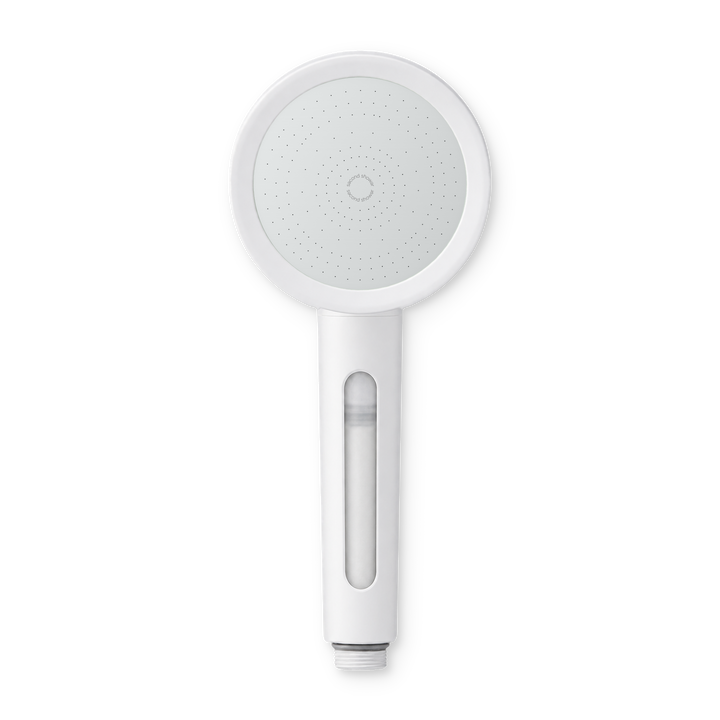
The Second Showerhead ($99, or $79 on subscription) replaces a fixed head. It screws onto the arm by hand, with 176 micro-jets and no measurable pressure loss from 40 to 80 PSI. Install guide.
The Second Showerhand ($89, or $69 on subscription) is the handheld. In the box are a shower mount that screws onto the arm, a hose, and the handle with 128 micro-jets. The mount goes on the arm, the hose's hex-nut end goes on the mount with its rubber washer inside, and the swivel end goes on the handle. If you already have a handheld, it replaces the whole set. We recommend the hose that comes in the box: hoses from other brands often use a slightly different rubber packing that can cost you pressure. Install guide.
Both screw onto a standard 1/2-inch NPT arm with no adapter and install in about a minute. No plumber's tape is needed; if a joint drips, add one wrap of the tape from the box and hand-tighten a quarter turn more. In our perception survey of 22 users, ease of installation scored 4.9 out of 5.
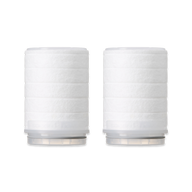
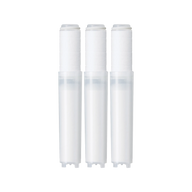
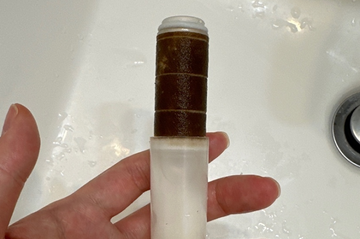
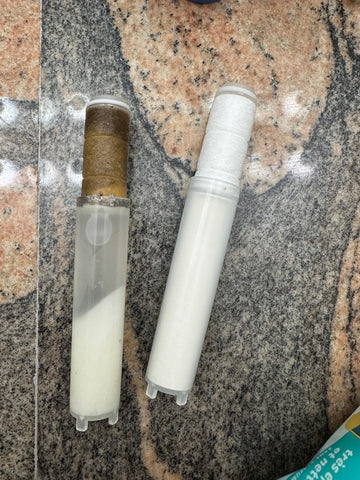
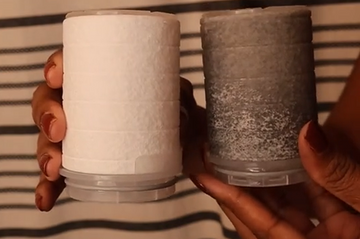
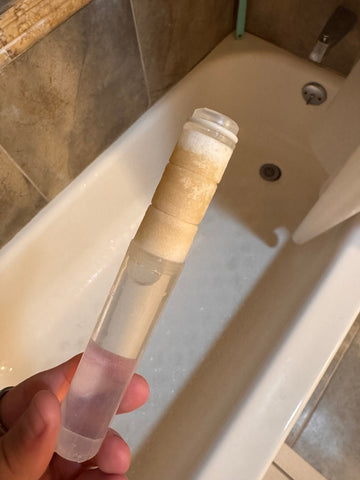
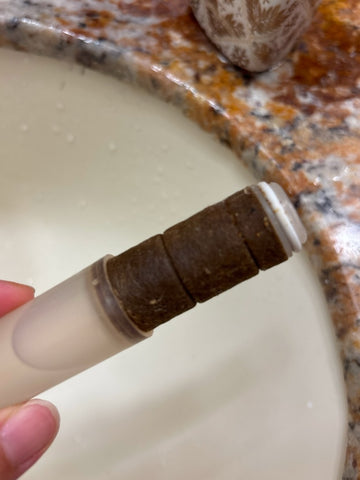
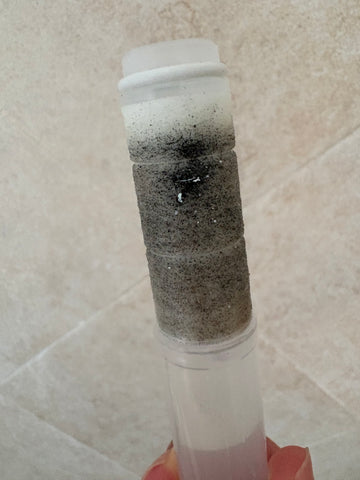
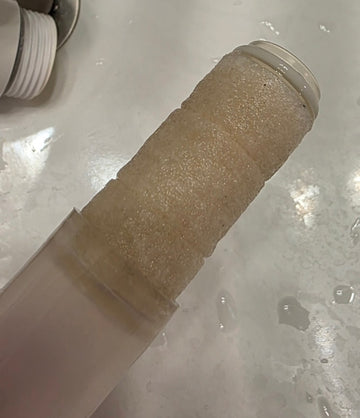
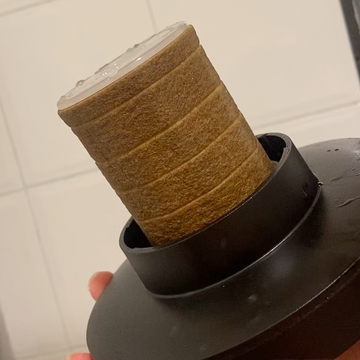
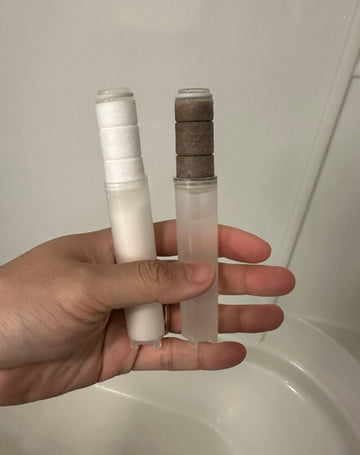
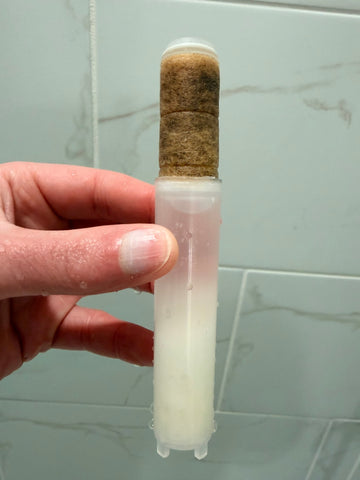
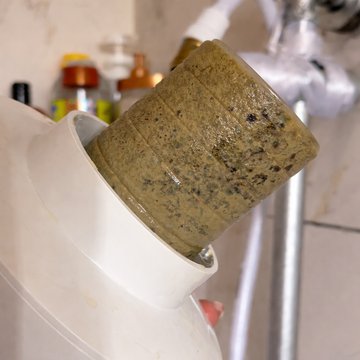
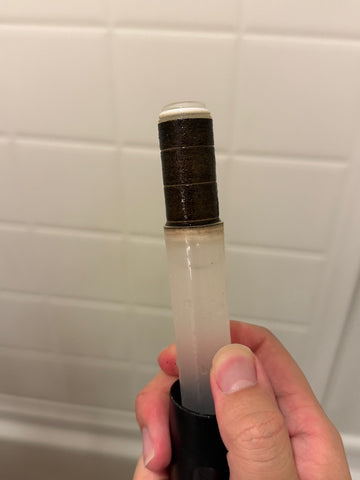
Fitting is only half the job. Both use the same two-stage filter: a micron PP sediment pre-filter, the NSF/ANSI 42* certified part, and a Vitamin C core that neutralizes chlorine and chloramine. In independent lab testing it reduced both by 99.9%, held through Day 1-60 on the Showerhead and Day 1-30 on the Showerhand in our own testing. We recommend a new filter every 60 days on the Showerhead and every 30 days on the Showerhand, or sooner if the filter looks deep brown or black or the water pressure drops noticeably.
*Micron PP sediment filter certified by NSF/ANSI 42 standards.
Adapters: when you need one, and when you do not
A standard arm needs none. If the arm is 1/2-inch NPT, any head or handheld built for US arms goes straight on. Skip the adapter kits for this case; every extra joint is one more place to leak.
A handheld you already own. You do not need a filter attachment for your old handheld: the Showerhand brings its own mount and hose. If you want to keep a fixed head as well, that takes a diverter between the arm and the heads, which we do not sell.
No arm at all. No adapter turns a flush-mount head into a shower arm. A plumber can fit an arm to the outlet behind it; if you rent, that is a question for your landlord.
Imported fixtures. Some fixtures sold outside North America use the metric G 1/2 thread, which is close to 1/2-inch NPT in size but straight instead of tapered. Adapters between the two exist. We have not tested third-party adapters with our products, so send us a photo before you buy one.
Renting? What to know before you swap the head
Swapping a shower head is not a plumbing change: nothing is cut, drilled or glued. Unscrew the original head, put it in a bag with its washer, and keep it. When you move out, unscrew ours and put the original back. It takes about the same minute in both directions.
Two habits keep it trouble-free: hand-tighten only, so you do not stress an old arm, and check the joint for drips the first time you run the water. For the renter side of the decision, see our renter-friendly shower filter guide.
2.5 or 1.8 GPM: the version that fits your state
Fit also means meeting the flow rules where you live. Federal rules cap showerheads at 2.5 gallons per minute at 80 PSI (10 CFR 430.32(p)). California is stricter: showerheads made since July 1, 2018 must stay at or below 1.8 gallons per minute (California Code of Regulations, Title 20, section 1605.3). Some other states and cities set their own limits, so check yours if you are not sure.
Both Second Shower models come in two versions: 2.5 GPM, the US standard, and 1.8 GPM, the California-compliant version, certified with the California Energy Commission and compliant with Department of Energy rules. In certification testing the 1.8 GPM versions measured 1.54 GPM on the Showerhead and 1.69 GPM on the Showerhand.
Which one is right for your shower?
FAQ
Are shower filters universal?
In the US and Canada, nearly. Shower arms end in a standard 1/2-inch NPT thread, and the plumbing fittings standard requires showerheads made for standard arms to connect to it. The exceptions are showers with no arm, handhelds fed from a tub spout or wall outlet, and fixtures bought abroad.
How do I know if a shower filter will fit my shower head?
Unscrew the head and look at the arm. A threaded pipe end a little under an inch across, with threads that narrow toward the tip, is the standard 1/2-inch NPT arm, and a filter made for US arms will screw onto it. If you see no arm, or something different, send a photo to the filter maker before you buy.
Will a shower filter fit a handheld shower?
Yes, if the handheld's hose starts at the shower arm. The Second Showerhand comes with its own mount, hose and handle and replaces the whole set. If your hose starts at the tub spout or a wall outlet, send us a photo first.
Do I need plumber's tape or tools to install a shower filter?
Not for ours. The Second Showerhead and Second Showerhand screw on by hand in about a minute. If a joint drips, add one wrap of the plumber's tape from the box. The wrench in the box is only for loosening a stuck old head.
Will a shower filter fit a rain shower head?
If the rain head hangs from a standard arm, the thread will match. Whether the angle and reach suit a filtered head depends on the arm, so send a photo first. A rain head set flush into the ceiling has no arm to screw onto.
Can I install a shower filter in a rental?
Yes. Swapping the head is not a plumbing change: unscrew the original, keep it with its washer, and put it back when you move out. Hand-tighten only and check for drips the first time you run the water.
How we know
- ASME A112.18.1-2018/CSA B125.1-18, Plumbing supply fittings: clause 4.4.9 (showerheads for standard shower arms connect to a 1/2 NPT male thread) and clause 4.4.4 (hand-held shower connection threads 1/2-14 NPSM or ISO 228-G 1/2 B).
- ASME B1.20.1, Pipe Threads, General Purpose (Inch): 1/2-inch NPT, 14 threads per inch, outside diameter 0.840 in.
- 10 CFR 430.32(p), US Department of Energy energy conservation standards: showerhead maximum 2.5 gallons per minute at 80 psi.
- California Code of Regulations, Title 20, section 1605.3 (Appliance Efficiency Regulations): showerheads manufactured on or after July 1, 2018, maximum 1.8 gallons per minute at 80 psi.
- Second Shower: product fit (standard 1/2-inch NPT shower arms), box contents and install steps from our install guides and support FAQ; perception survey of 22 users (ease of installation 4.9 out of 5); DOE compliance of the 2.5 and 1.8 GPM versions and CEC certification of the 1.8 GPM version; pressure test 40-80 PSI; independent lab test of the full filter assembly (free chlorine and chloramine, 99.9%) and our own peak-window testing (Day 1-60 Showerhead, Day 1-30 Showerhand); prices from secondshower.us, October 2026.